

Infosys boss says new strategy moving in right direction, optimistic of regaining bellwether status.

First acquisition under Sikka's plan of buying technologies for tomorrow

The company is looking at building the 'bench' of employees in reserve, to be prepared for emerging demands, beside keeping staff attrition in control. Maintaining decent bench strength would help in implementing new projects.


Stating that he is looking forward to working with talented Infoscions, Vishal Sikka said, "I am honoured to lead Infosys, an iconic company built by pioneers in the technology industry. I look forward to working with and learning from talented Infoscions around the world."

The proposed campus will come up on around 125 acres, which the company will acquire from airport authorities, and would house as many as 3,000 employees.
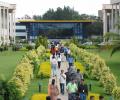
Infosys COO says, the firm is trying its best retain talent.

The results will give an indication whether Nilekani would continue with the software plus services strategy adopted by Sikka, or tweak it to reflect his worldview of the explosion in data.

The annual award includes a pure gold medal, a citation and a prize purse worth $ 100,000 or its equivalent in the Indian rupees.

From the Sensex basket, Bajaj Finance, Mahindra & Mahindra, HDFC Bank, JSW Steel, Maruti, Wipro, Bharti Airtel, Bajaj Finserv, ICICI Bank and ITC were the major gainers. Nestle India, HCL Technologies, Larsen & Toubro, Tata Consultancy Services, Tata Motors and Infosys were among the laggards.
Software major Infosys Technologies Ltd is not pursuing its American Depository Receipt plans, as it feels the time is not conducive for another offshore listing and would opt for a "wait and watch" approach.

Bags long-term outsourcing deal from Allied Irish Banks

'80% of start ups fail because they don't have a support system to help them in the very early phase.' 'It's not just an idea that takes an entrepreneur through the initial three years of journey.' 'What plays a definitive role in making a start-up successful is idea+team+capital+mentors+access to a larger ecosystem.'

She was among the key executives brought in by Sikka from SAP and was overseeing large deals
Infosys has a proven track record of delivering services for over 15 years now. So, the long-term growth prospects, from this perspective, are encouraging.
Tata Consultancy Services, India's number one information technology services company, could overtake Infosys to become the most profitable one for the first time on a full-year basis in 2012-13.

'India's top companies currently lack the organisational wherewithal to hire and train 2 million interns annually, given their current scale of operations and existing employee base.'
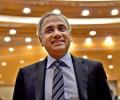
2019, however, will be a bigger test as the firm continues to deal with rising attrition and margin pressure.
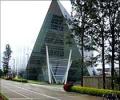
Swaminathan D ('Swami' Swaminathan), the current COO and senior vice president of Infosys BPO, is now the CEO and MD.

India's second largest IT services company Infosys on Wednesday said its consolidated net profit grew by 11.9 per cent to Rs 5,421 crore for the September 2021 quarter. Infosys had clocked a net profit of Rs 4,845 crore in the same period last fiscal, according to a regulatory filing. The Bengaluru-based company saw its revenues rising by 20.5 per cent to Rs 29,602 crore in the quarter under review (Q2FY22) from Rs 24,570 crore in the year-ago period.
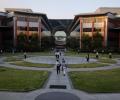
The latest one being Ken Toombs, global head of consulting at the Bengaluru-based entity.

Infosys has been focusing on winning more lucrative digital technology and automation outsourcing contracts.

Through these new hires and centres, Infosys will also focus on enhancing its play in new technology areas like artificial intelligence (AI), machine learning, user experience, cloud and big data.
Several observers have questioned the weakness in execution of the 3.0 strategy.

There were no evidence of any kickbacks, inappropriate contracting or unreasonable expenses

Among the 30 Sensex companies, Power Grid, Axis Bank, State Bank of India, Bajaj Finserv, Reliance Industries and NTPC were the biggest gainers. Tech Mahindra, Infosys, Wipro, HCL Technologies and Titan were among the laggards.

'Young people are digital natives.' 'Hence, their ability to learn coding and to become a full stack engineer is far more.' 'The demand for such people is more as we feel that if we hire people from campuses, we can train them to become what we want.'

The top-10 valued companies added a whopping Rs 2.72 lakh crore to their market valuation last week, as the domestic equity benchmarks witnessed heavy buying tracking an overall bullish trend in global equities. The benchmark indices made strong gains in the holiday-truncated week. The 30-share BSE Sensex climbed 2,313.63 points or 4.16 per cent, while the NSE Nifty advanced 656.60 points or 3.95 per cent. Mirroring the bullish trend in the broader market, the combined market capitalisation (m-cap) of the country's top-10 firms zoomed by Rs 2,72,184.67 crore during last week.

Infosys has tried to bring stability to the troubled company, which was struggling to maintain its growth momentum in the changing dynamics of technology industry.
India's largest IT services company Tata Consultancy Services (TCS) on Thursday posted an 8.7 per cent year-on-year rise in its consolidated net profit at Rs 12,040 crore in the first quarter ended June 2024. The net profit for the year-ago period stood at Rs 11,074 crore.

Among the 30 Sensex companies, Axis Bank, HDFC Bank, ICICI Bank, Kotak Mahindra Bank, IndusInd Bank, State Bank of India, Infosys, Wipro, Tech Mahindra and HCL Technologies were the gainers. On the other hand, Titan, Maruti, Bharti Airtel, Larsen & Toubro, NTPC, Reliance Industries, Bajaj Finance and Power Grid were among the laggards.

Among the 30 Sensex companies, Tech Mahindra, HCL Technologies, State Bank of India, NTPC, Infosys, Larsen & Toubro, Tata Consultancy Services and Wipro emerged as the biggest gainers. Hindustan Unilever, Asian Paints, Mahindra & Mahindra, Nestle, IndusInd Bank and Sun Pharma were among the laggards.

"There was not a single decision that I took during my second tenure without discussing it with Ranga and getting valuable input from him," says Narayana Murthy.

The share buyback -- which will be the first in the company's 36-year history -- has been a long-standing demand by some of the founders and high-profile former executives, who have been pushing Infosys to return surplus capital to its shareholders.
There is a surge in number exploring a change at middle and senior levels; recruitment agencies cite restiveness on pay, work patterns.

Infosys said on Monday it would buy Panaya Inc, a New Jersey-based provider of automation technology, for an enterprise value of $200 million

Trouble started brewing after Cognizant announced that Ravi Kumar, former Infosys president, would take over as the Nasdaq-listed company's CEO.
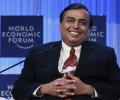
Infosys chief Vishal Sikka also said that demonetisation has shown to the world that Indians are ready to adopt new technology disruptions.
Asked what kind of pricing environment did he see in the slowdown period, Gopalakrishnan said the pricing was stable for now as the focus on cost was there since 2008 as the companies realise the perils of global slowdown.
